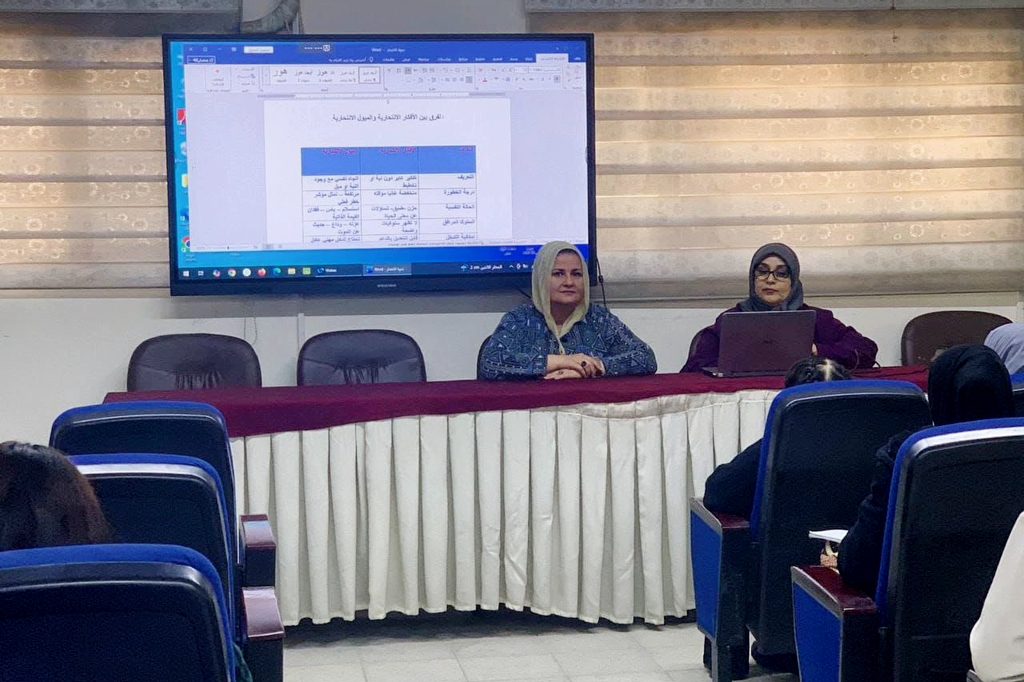
The University Psychological Counseling Unit, in cooperation with the Department of Physics and the Continuing Education Unit at the College, organized an awareness and guidance seminar entitled *“Suicidal Behavior Among Youth: Causes, Motivations, and Prevention.”* The seminar was delivered by the department’s faculty members, Prof. Dr. Fadwa Abbas Mustafa and Assist. Prof. Wasan Nasser Mohammed, in the presence of the department’s teaching staff and students.
The seminar addressed the concept of suicidal behavior as a multidimensional psychological phenomenon associated with psychological, social, and economic factors, particularly during youth—a stage characterized by heightened sensitivity and increasing challenges. It also highlighted the major causes and motivations linked to such behavior, including psychological stress, lack of social support, and traumatic life experiences.
Furthermore, the seminar focused on early behavioral indicators that may signal potential risk, such as social isolation, loss of interest in life, and emotional and behavioral changes, emphasizing the importance of early intervention in preventing the escalation of such cases.
The seminar also discussed methods of prevention and psychological intervention through strengthening social support, activating psychological counseling services within educational institutions, and developing coping skills and psychological resilience among young people, thereby contributing to psychological well-being and reducing risky behaviors.
The seminar concluded with several recommendations, including:
1. Activating the role of psychological counseling units in educational institutions.
2. Promoting mental health awareness among university students.
3. Guiding teaching staff to recognize early indicators of suicidal behavior.
4. Strengthening social and family support for young people.
5. Supporting scientific research addressing suicidal behavior and prevention methods.
The seminar concluded by emphasizing that preventing suicidal behavior is a shared responsibility that requires integrated efforts among educational institutions, families, and society to ensure a safe and supportive environment for the mental health of young people.
